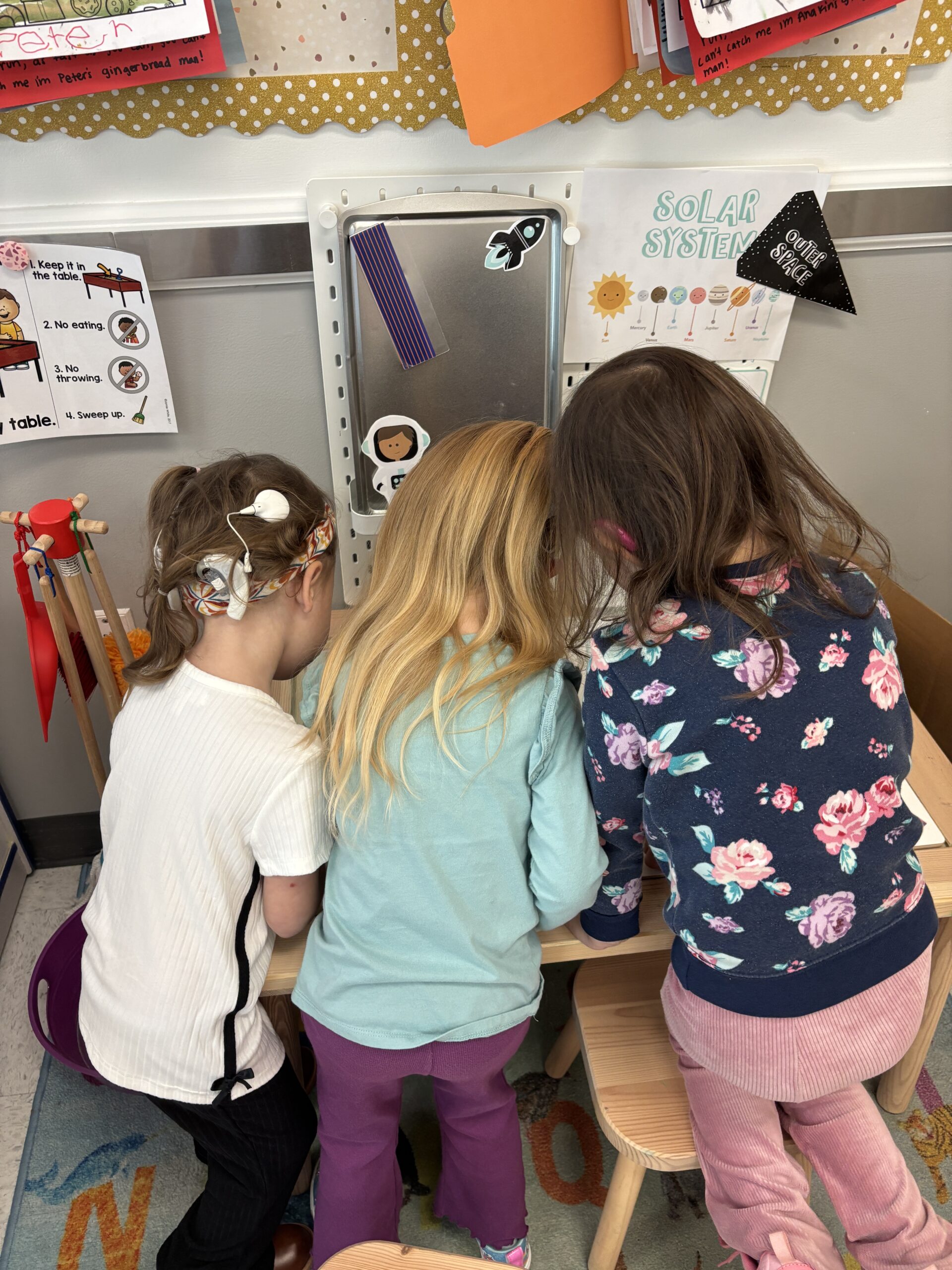
In classrooms serving children who are deaf or hard of hearing, one of the most important, and often misunderstood, concepts is the difference between hearing and listening.
These two words are frequently used interchangeably, but they represent very different skills. Understanding this difference is essential for supporting language development, attention, behavior, and confidence in young children who are deaf or hard of hearing.
When preschool teachers truly understand listening vs. hearing in preschool, it changes how they teach, support, and advocate for their students.
This post may contain affiliate links, which means I may receive a commission, at no extra cost to you, if you make a purchase through a link. Please see my full disclosure for further information.
Why This Distinction Matters So Much
For children who are deaf or hard of hearing, access to sound does not automatically mean access to language.
A child may:
- Be wearing hearing aids or cochlear implants
- Pass daily listening checks
- Respond to environmental sounds
…and still be learning how to listen.
Listening is an active brain-based skill. It requires a child to detect sound, attach meaning, remember what was heard, and respond appropriately. When we assume that hearing equals listening, we may unintentionally place expectations on children before their listening skills are fully developed.
Understanding this distinction helps teachers:
- Set realistic, developmentally appropriate expectations
- Respond to behavior through a listening lens rather than a compliance lens
- Create classrooms that actively teach listening, not just test it


Hearing Access vs. Listening Development
Hearing access refers to a child’s ability to detect sound, often supported by hearing technology such as hearing aids, cochlear implants, or BAHA’s (Bone-Anchored Hearing Aid).
Listening development is the process of learning to make meaning from sound.
For children who are deaf or hard of hearing, listening development:
- Takes time
- Requires intentional teaching
- Depends on consistent wear time and quality input
Even with excellent hearing access, listening is not automatic. It must be nurtured through daily experiences that help the brain learn what sounds mean and why they matter. Using specific Listening and Spoken Language Strategies, support children who are deaf or hard-of-hearing build their listening and language skills.
How Preschoolers Who Are Deaf or Hard of Hearing Learn to Listen
Children who are deaf or hard of hearing learn to listen through:
- Repeated exposure to meaningful spoken language
- Clear, intentional language tied to actions and routines
- Opportunities to hear language before being expected to respond
Listening grows best when children feel successful. This means providing language at their level, slowing down, and giving their brains time to process what they hear.
The Role of Repetition and Routine
Repetition and routine are critical for children who are deaf or hard of hearing.
Predictable language helps children:
- Anticipate what is coming next
- Build auditory memory
- Strengthen understanding over time
When teachers consistently use the same phrases during daily routines, clean-up, transitions, snack, and circle time, children begin to recognize patterns and attach meaning to spoken language.
These repeated moments are powerful listening lessons.
Why Play Is Essential for Listening Development
Play is one of the most effective and natural ways to build listening skills for children who are deaf or hard of hearing.
During play, children are:
- Highly motivated
- Engaged without pressure
- Hearing language paired with actions and objects
Play allows children to practice listening in meaningful, low-stress ways. Instead of being asked to “listen,” they are experiencing language in context, where listening makes sense and has a purpose.


Classroom Examples: Hearing vs. Listening in Action
Circle Time
A child hears the teacher’s voice, but does not follow directions or respond to questions. This may indicate the child is still learning how to process spoken language, not that they are inattentive.
Centers
A child hears “Put the toys away,” but continues playing. This may mean the language was too fast, too complex, or unfamiliar, not that the child is refusing.
Transitions
Using the same transition song or spoken routine daily supports listening by providing predictable auditory input that children can learn over time.
Supporting Listening in Preschool Classrooms for Deaf and Hard-of-Hearing Children
To support listening development:
- Ensure consistent access to sound and technology use
- Use clear and repeated language
- Pair spoken language with actions and visuals
- Build listening into play and daily routines
- View listening as a developing skill, not a behavior expectation
When teachers understand the difference between hearing and listening, they can better meet children where they are and support steady, meaningful growth.
Check out my free Listening & Spoken Language Strategies handouts to support your child’s listening skills!
